
Build Trustworthy AI with ISO 42001
ISO 42001 is the world's first international standard for AI management systems. It gives your organisation a structured framework to develop, deploy, and govern AI responsibly — with accountability, transparency, and risk controls built in.
What You'll Learn
- What ISO 42001 requires from your organisation
- How it aligns with Singapore's IMDA AI Governance Framework
- How AI tools accelerate certification readiness
- Which governance gaps to close first
What is ISO 42001?
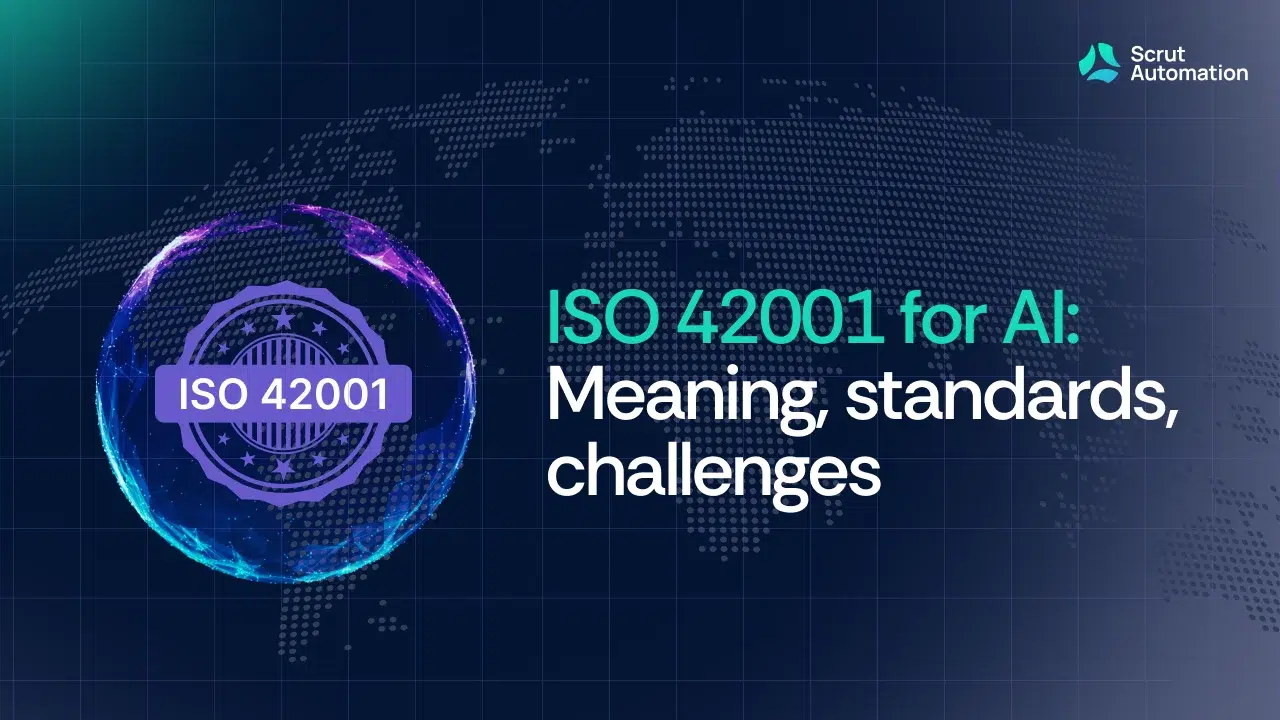
Published in 2023 by the International Organization for Standardization, ISO 42001 is the first standard specifically designed for organisations that develop or use AI. It covers the full AI management lifecycle — from governance structures and risk management through to transparency, fairness, and continuous improvement.
Unlike sector-specific regulations, ISO 42001 applies to any organisation relying on AI, regardless of industry or company size. It is designed to be scalable and proportionate.
ISO 42001 aligns closely with Singapore's IMDA AI Governance Framework — making it a natural fit for Singapore-based organisations seeking to formalise responsible AI practices.
Six Ways AI Accelerates ISO 42001 Readiness
The most time-consuming parts of ISO 42001 certification are documentation, risk tracking, and ongoing monitoring — all areas where AI creates measurable efficiency gains.
AI Risk Register Automation
Automatically build and maintain the risk register ISO 42001 mandates — documenting AI risks, impact assessments, and mitigation measures with audit-ready records at every stage.
Bias & Fairness Testing
Automated testing pipelines that check model outputs for discriminatory patterns, document results, and feed findings back into the continuous improvement cycle the standard requires.
Audit Trail & Decision Logging
Automatically log model decisions, version changes, training data lineage, and governance approvals — creating the traceable record of AI system management ISO 42001 demands.
Policy & Documentation Management
AI-assisted drafting, version control, and periodic review of the management system policies, procedures, and records required under the standard — keeping documentation current without manual effort.
Continuous Compliance Monitoring
Real-time dashboards tracking your AI systems against ISO 42001 clauses, alerting teams when controls drift or new risks emerge — supporting the standard's continuous improvement mandate.
Stakeholder Impact Assessment
AI tools to document how each AI system affects different stakeholder groups, supporting the human rights and ethics impact assessment requirements built into the standard.